Skull and Bones: The Ivy League Incubator
The Founding at Yale
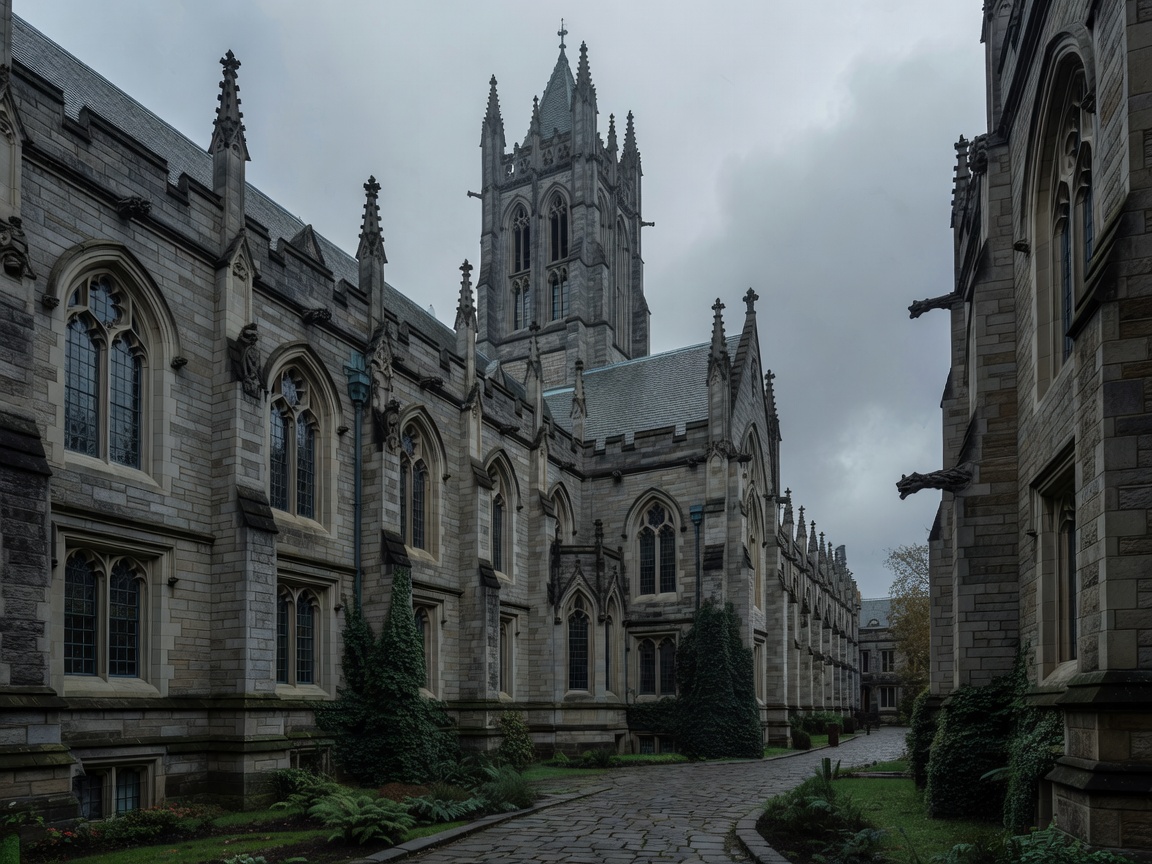
Unlike esoteric orders born from enlightenment philosophy or religious persecution, Skull and Bones was born in the elite academic environment of Yale University. Founded in 1832 by William Huntington Russell and Alphonso Taft, the organization was originally known as the "Eulogian Club" and was created as a reaction to disputes over the Phi Beta Kappa election process. Russell, having recently returned from studying in Germany, is believed to have been inspired by German occult and student societies, borrowing elements of their death-centric imagery.
The society operates out of a windowless, sandstone building on High Street in New Haven, Connecticut, universally referred to as "The Tomb." Unlike large-scale fraternal orders that welcome thousands, Skull and Bones relies on extreme exclusivity to maintain its prestige and power.
The Tapping Process and Rituals
Every spring during "Tap Day," the society selects exactly fifteen juniors to be initiated into the group for their senior year. The selection criteria historically favored white, male, Protestant students from prominent families, though the demographic makeup has slowly diversified since the admission of women to Yale in 1969, and the society itself accepting women in 1991.
The internal rituals remain highly guarded, though various leaks over the decades have provided glimpses. The initiation allegedly involves macabre psychodramas designed to bond the fifteen members—known as "Knights"—together. Central to their ritual year is the "connubial bliss" biographical history, where members are expected to recount their entire personal and sexual histories to their cohort in a dimly lit room inside the Tomb. This practice of extreme vulnerability is intended to build absolute trust and loyalty among the group.
Power, Networking, and the Patriarchs
Once members graduate, they transition from "Knights" to "Patriarchs" (alumni). This alumni network is where the true power of Skull and Bones resides. The Russell Trust Association, the business arm of the society, manages the group's assets, which notably includes Deer Island, a 40-acre retreat on the St. Lawrence River used exclusively by members.
The alumni network functions as an elite mutual aid society. The roster of Patriarchs reads like a roll call of the American establishment. The society has produced three U.S. Presidents (William Howard Taft, George H.W. Bush, and George W. Bush), numerous Supreme Court Justices, cabinet members, and founders of major corporations and financial institutions. In the 2004 U.S. Presidential election, both major party candidates—George W. Bush and John Kerry—were members of Skull and Bones, a remarkable statistical anomaly that highlighted the society's outsized influence in American politics.
Connections to American Intelligence
One of the most heavily scrutinized aspects of Skull and Bones is its historical connection to the United States intelligence apparatus. During the mid-20th century, the society essentially functioned as a recruiting ground for the Office of Strategic Services (OSS) and its successor, the Central Intelligence Agency (CIA). The shared WASP background, Ivy League education, and proven ability to maintain secrecy made Bonesmen ideal candidates for the Cold War intelligence community. Prominent figures like F. Trubee Davison and James Jesus Angleton have deep ties to this network.
Controversies and Macabre Lore
Beyond its political influence, Skull and Bones is famous for its alleged "crooking" (stealing) of historical artifacts to furnish the Tomb. The most infamous allegation is that Prescott Bush (father of George H.W. Bush) and other members stole the skull of the Apache leader Geronimo from his grave at Fort Sill, Oklahoma, in 1918. While this claim remains a point of historical contention and legal battles by Geronimo's descendants, it underscores the intense, morbid mythology the society deliberately cultivates.
Skull and Bones remains the most prominent example of an American collegiate secret society. It represents a different kind of secrecy: not one hiding from the state, but one operating within the highest echelons of the state itself, relying on exclusivity and elite academic credentialing rather than esoteric spiritualism.