Freemasonry: The Craft and Its Legacy
Origins: From Operative to Speculative
Freemasonry stands as the template against which almost all other modern fraternal and secret societies are measured. Its origins, while debated among historians, are generally traced back to the local fraternities of stonemasons who regulated the qualifications of their trade and interacted with authorities and clients during the Middle Ages. These "operative" masons built the cathedrals and castles of Europe, using a system of secret passwords and handshakes to prove their skill level when traveling to new construction sites.
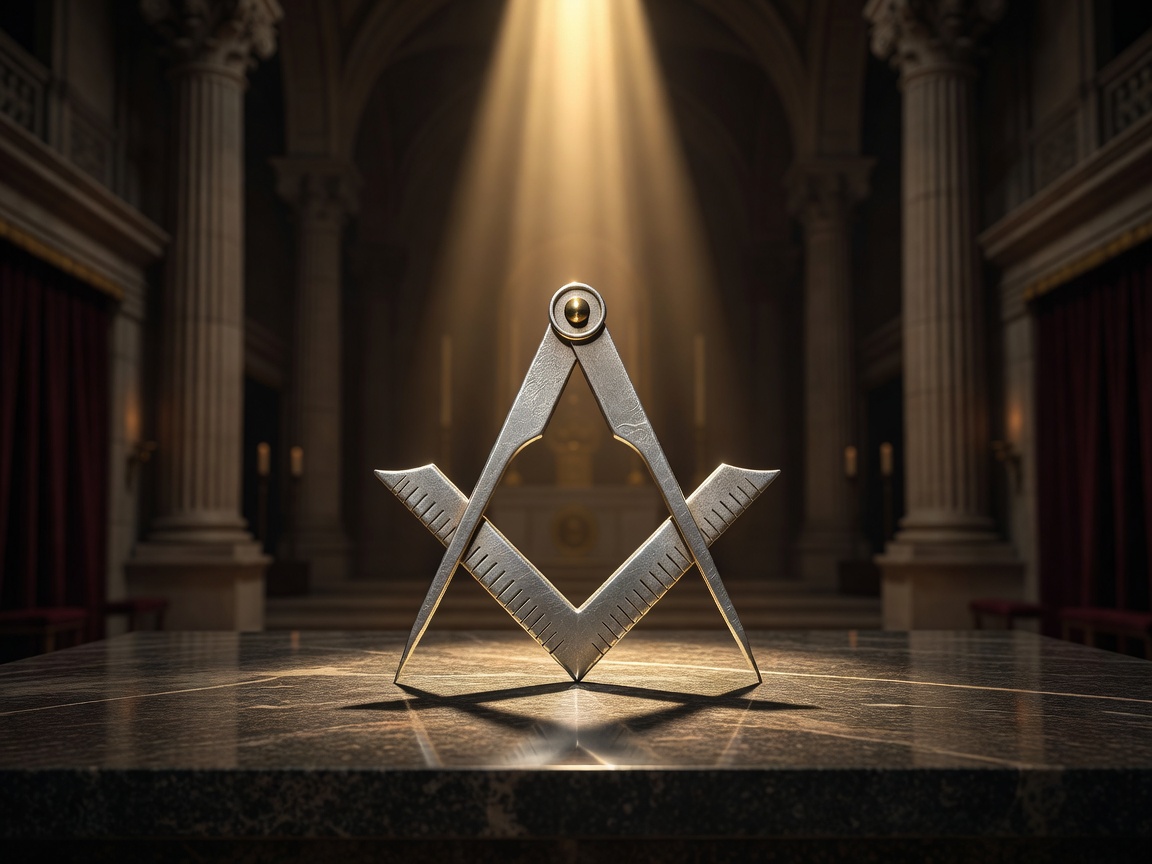
By the 17th century in Scotland and England, these operative lodges began accepting "speculative" or non-working members. This shift fundamentally altered the nature of the organization. Instead of building physical structures, speculative Freemasonry adopted the tools of the stonemason—the square, the compasses, the plumb, and the level—as allegorical symbols for building moral character and a better society.
The Formalization of the Grand Lodge
A pivotal moment in the history of the society occurred on June 24, 1717, when four existing London lodges met at the Goose and Gridiron Ale-house in St. Paul's Churchyard and formed the first Grand Lodge of England. This centralized the governance of the craft and sparked a rapid expansion across Europe and the American colonies. The publication of James Anderson’s Constitutions of the Free-Masons in 1723 provided a standardized mythological history and a set of regulations that cemented the intellectual framework of the order.
This framework was inherently tied to the ideals of the Enlightenment. Masonic lodges became safe havens for free thought, requiring only that a member profess belief in a Supreme Being (referred to architecturally as the "Great Architect of the Universe"), leaving the specifics of religion and politics at the door. This tolerance made lodges highly attractive to philosophers, scientists, and revolutionaries.
Structure and The Blue Lodge
The foundational unit of Freemasonry is the "Blue Lodge," which confers the three fundamental degrees of the craft. These degrees mirror the historical progression of a tradesman:
- Entered Apprentice: The initiation degree, introducing the candidate to the basic symbolism, morality, and secrecy of the order.
- Fellowcraft: Focused on the pursuit of knowledge, particularly the liberal arts and sciences.
- Master Mason: The highest fundamental degree, centered on the allegorical story of Hiram Abiff, the chief architect of King Solomon's Temple. It is a profound psychodrama dealing with integrity, mortality, and fidelity.
Once a member achieves the status of Master Mason, they may choose to join appendant bodies—such as the Scottish Rite (which confers degrees numbered 4 through 33) or the York Rite (which includes the Royal Arch and Knights Templar). These appendant bodies are not "higher" than the Master Mason degree; rather, they offer lateral philosophical expansion and deeper historical allegories.
Symbolism and Allegory
The visual language of Freemasonry is pervasive. The most recognizable emblem is the Square and Compasses, frequently featuring the letter "G" in the center, representing Geometry and God. The All-Seeing Eye, often misattributed strictly to the Illuminati in modern conspiracy culture, has long been a Masonic symbol reminding members that their actions are observed by the Great Architect.
The checkered flooring found in lodges represents the dual nature of human existence (good and evil, light and dark), while the rough and perfect ashlars (stones) symbolize the transition of a man from an unrefined, ignorant state to an educated, moral state through the teachings of the craft.
Societal Impact and Controversies
Freemasonry's influence on western civilization is undeniable. Many Founding Fathers of the United States, including George Washington and Benjamin Franklin, were prominent Freemasons, and Masonic principles heavily influenced the structuring of democratic constitutions. Prominent figures in arts and sciences, such as Wolfgang Amadeus Mozart and Winston Churchill, were also members of the brotherhood.
However, the secrecy inherent in the organization has bred suspicion. The Catholic Church first issued a papal bull against Freemasonry in 1738 (In eminenti apostolatus specula), citing religious concerns over its oaths and naturalistic philosophy. In the United States, the unexplained disappearance of William Morgan in 1826—after he threatened to publish Masonic secrets—sparked the fiercely powerful, though short-lived, Anti-Masonic Party.
Today, Freemasonry has evolved into a predominantly philanthropic and fraternal organization, funding children's hospitals and local charities. Despite a significant decline in membership numbers since the mid-20th century, the cultural footprint of the lodge system remains a critical pillar in the study of western esotericism and sociology.